
Around three in ten students in Australian schools now come from a language background other than English, and roughly one in four are learning English as an additional language or dialect. That is well over a million young people navigating school across cultures. Against that steady base, full-fee overseas enrolments have climbed to 27,027 in 2025 (ABS, 2025), the highest since 2019. Australian classrooms have never been more culturally diverse, and the diversity is no longer at the margins. It is the mainstream.
Yet belonging hasn't kept pace. National attention to racism and student safety has made inclusion a board-level issue, and the patterns that surface at university begin in schools, in the systems that shape what follows. We help your school turn that diversity into genuine belonging: deliberately designed, well built, and improved over time.
Why Now: The Data
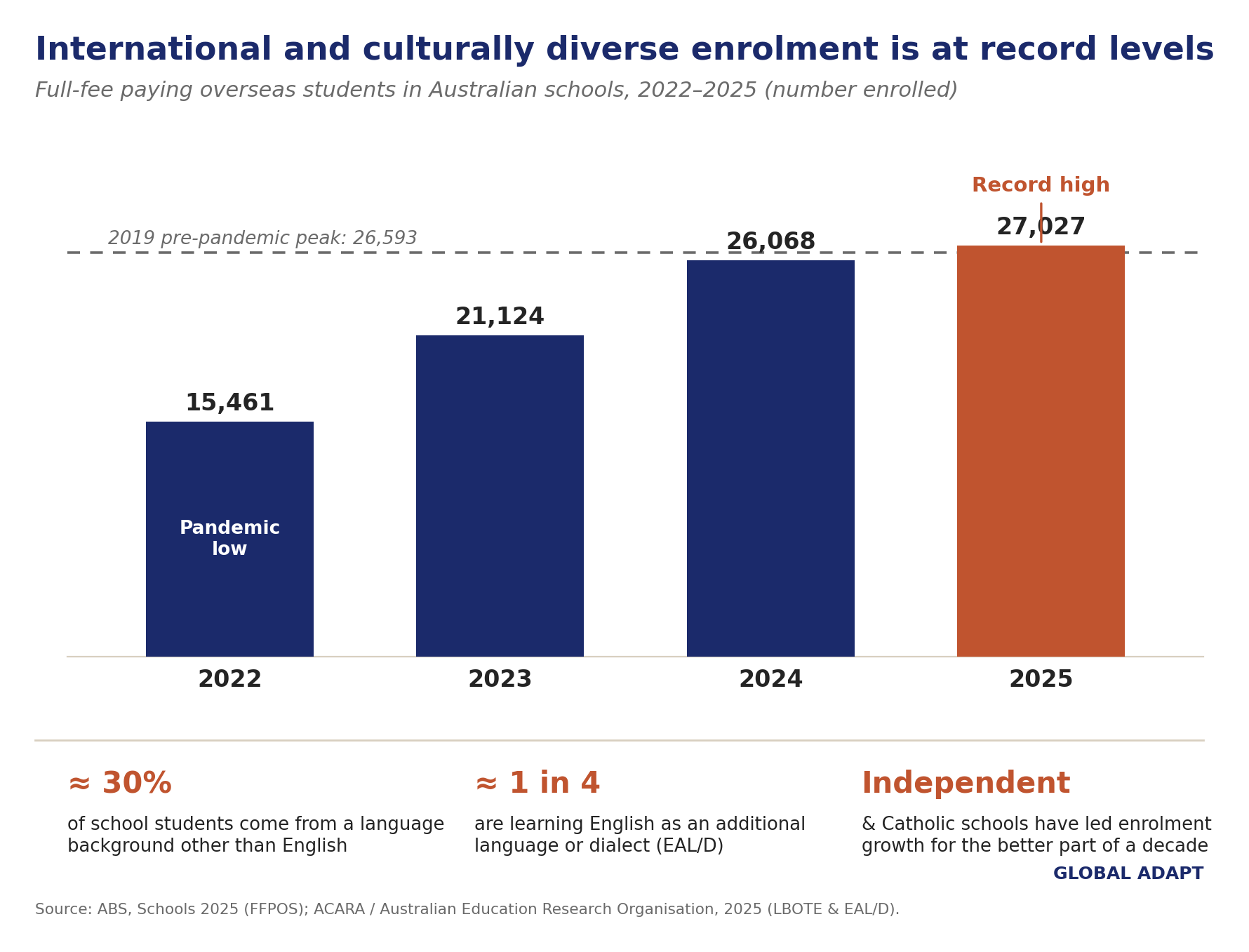
PISA 2025 confirms what school leaders already sense: classrooms are more culturally and linguistically diverse than ever, and the OECD is explicit that the challenge is not diversity itself but whether a school has the capacity to respond to it.
Our School Offers
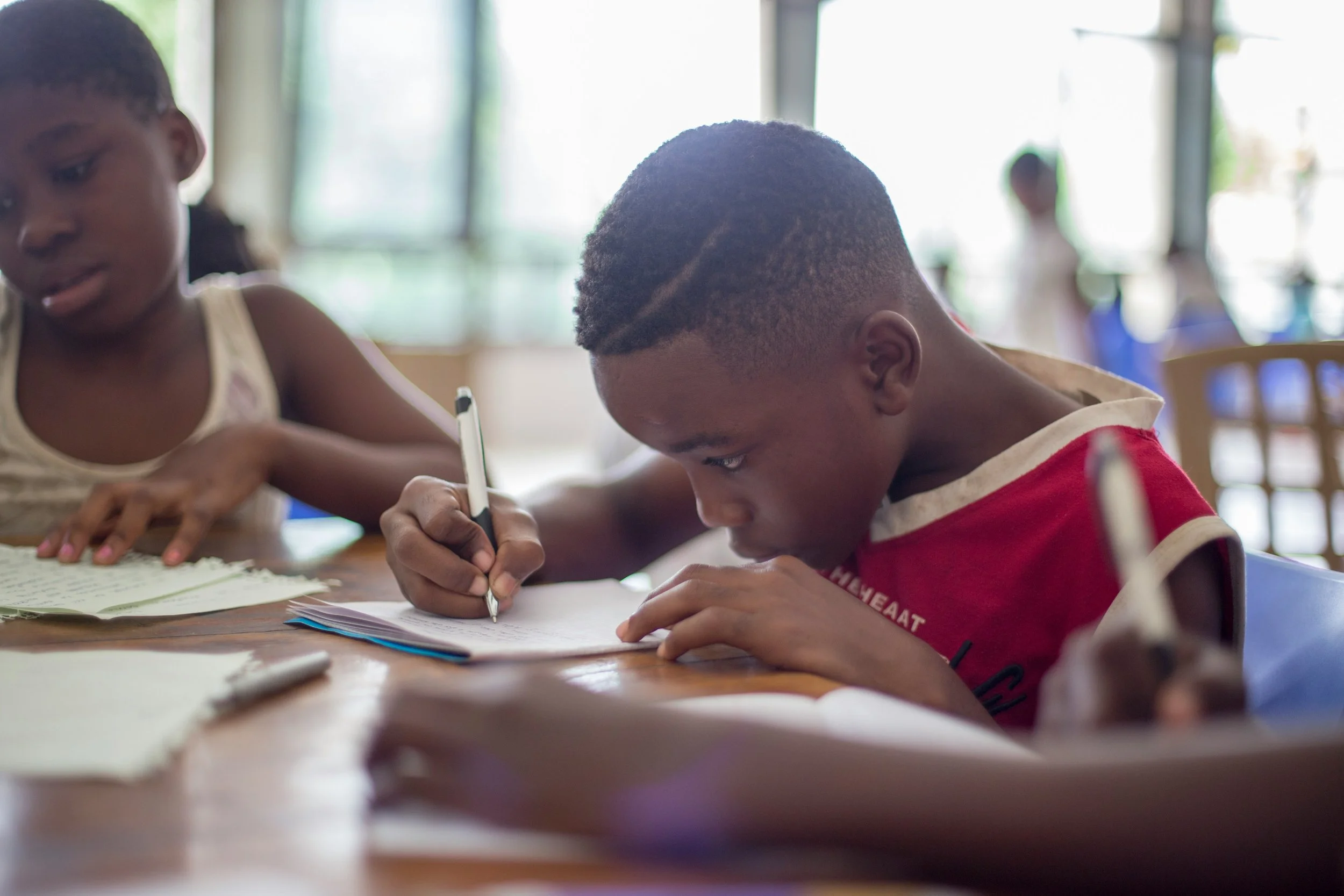
Global Adapt helps students who enrol but never quite belong, pastoral systems that are stretched to the limits, and staff doing their best without a framework to match.
We are there for schools that are ready to treat international and culturally diverse student experience not as an add-on, but as institutional infrastructure. Something you design deliberately, build well, and improve over time. Our work is research-backed and evidence-based, with lived experience embedded, and it's delivered by a practitioner who knows what actually changes both classrooms and the school's enrolment and sustainability.
-
A half-day or full-day PD session for teaching and pastoral staff, delivered on-site.
A pre-engagement consultation to tailor content to the cohort.
A reference resource pack for staff to keep.
Content covering: TCK identity, EAL/D-aware classroom strategy, recognising cultural-acculturation signals, neuroinclusion across mobility, practical scripts for parent–teacher communication across cultures, and the AHRC Respect at Uni framing translated for K–12.
Pricing: from AUD $1,800.
-
A structured diagnostic over 8–12 weeks.
Document review of relevant policies and systems.
Structured staff and student interviews.
Confidential student-voice collection (8–14 students across year levels), under written consent and an ethics framework.
Parent-feedback sampling.
Observation of arrival and pastoral systems in operation.
A 25–40 page report with maturity scoring per domain, a prioritised action roadmap, and an executive-ready summary.
Timeline: scoping (week 1), evidence collection (weeks 2–6), analysis (7–8), report and executive presentation (9–12).
Pricing: from AUD $8,500.
-
A 3-workshop or 5-workshop series for a student cohort (up to 25 students).
Each workshop is 90 minutes and combines structured content, student-voice activities and take-away language.
Content covering: cross-cultural identity as developmental work, friendship-building strategies in a new school, language and code-switching, the predictable transition phases, repatriation preparation, and asset orientation.
Grounded in the TCK literature, identity-development research and the CARRY Framework.
Designed for Year 7–12 cohorts; primary-age variants on application.
Pricing: from AUD $2,800.
-
A specialist add-on advisory for schools that already have a refugee, asylum-seeker or post-conflict cohort.
Content covering: trauma-informed classroom and pastoral practice, intergenerational considerations, family–school communication, EAL trajectory for students with interrupted prior schooling, partnership with settlement services, and pastoral support that protects without pathologising.
Grounded in years of humanitarian and development-field practice.
Delivery options: initial consultation (3 hours + written summary) AUD $1,200; specialist staff PD (half-day) AUD $2,400; embedded advisory (3-month retainer) AUD $7,500.
The BRIDGE Framework
Our work for schools runs on BRIDGE, a framework that treats belonging as something you build across six domains. Every engagement maps to these domains, so scope is clear and outcomes are concrete from the first conversation.

Belonging Architecture
Student arrival, orientation, integration.

Recognition Systems
How curriculum, routines, environment recognise cultural identity.


Intercultural Capability
How staff are equipped to support students.

Difference Continuity
Support of neurodiversity and difference.

Governance & Stewardship
How leadership oversees belonging strategically.
Evidence & Evaluation
Audit-and-improvement loop
A 30-minute consultation, free of charge, is the easiest way to explore where your school sits and what would help most. Reach out if you’d like more information on what we offer and how we work.